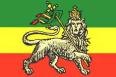
|
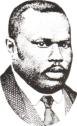
MARCUS GARVEY
When the black Jamaican Marcus Garvey on the begin of the 20th century preached
nationalism, he caused a mass movement in North America. In Jamaica
he was the developer of the “back-to-Africa” movement. He was preaching the equality of black and white and tried
to lift up the broken self-confidence of the black people by telling them to turn back to their roots and to put down the
western culture that was forced onto them. The real country is Zion, Zion
in Africa, from where the white kidnapped the black.
Garveys aim was the return of all black to Ethiopia,
the only never colonialised self-standing country in Africa. In his language a synonym for
the hole of Africa.
"If the white man has the idea of a white God, let him worship his God as he desires. If the yellow
man's God is of his race let him worship God as he sees fit. We, as Negroes, have found a new ideal. Whilst our God has no
colour, yet it is human to see everything through one's own spectacles, and since white people have seen their God through
white spectacles, we have only now started out (late though it be) to see our God through our own spectacles. The God Isaac
and the God Jacob let Him exist for the race that believes in the God of Isaac and the God of Jacob. We negroes believe in
the God of Ethiopia, the everlasting God
- God the Father, God the son and God the Holy Ghost, the one God of all ages. That is the God in whom we believe, but we
shall worship Him through the spectacles of Ethiopia."
1919 Garvey founded the vessel line Black
Star Line, which should have build up the transport possibility to Africa. He provided
shareholding papers only for black and made million of dollars by selling a single share for 5 $.Even under permanent persecution
through the authorities the community still bought an old cotton freighter and started 1920 the trade between Jamaica and
New York.
His movement "Universal Negro Improvement Association" (UNIA) who was said to be
having over 3 million members was at that time a major political factor.
"What We Believe"
The Universal Negro Improvement Association advocates the uniting and blending
of all Negroes into one strong and healthy race. It believes that the Negro race is as good as any other, and therefore should
be proud of itself as others are. It believes in the spiritual Fatherhood of God and the Brotherhood of Man. It believes in
the social and political separation of all people to the extent that they promote their own ideals and civilisation, with
the privilege of trading and doing business with each other. It believes in the promotion of a strong and powerful Negro nation
in Africa. It believes in the rights of all men.
Marcus Garvey, President-General, 1.1.1924"
A big influence he was also to African politicians – for example "Zik" Azikiwe
from Ghana, Kwame Nkrumah from Ghana und Jomo Kenjatta from Kenia, who leaded their countries later to independence.
In the USA it leaded to the famous bus drive of Montgomery which caused the civil rights movements.
1921 Garvey founded in New York die "African Orthodox Church" before he was put in prison 1925 because he was said to be guilty
of tax evasion.1927 he was deported to Jamaica.
1940 he died quiet in London.
His body was sent back to Jamaica in a
big ceremony where he was laid to rest in a mausoleum.
Garvey is a celebrated national hero of Jamaica since its independence. One of his most important sentence was:
"Look to
Africa, when a black king will be crowned the salvation is close!"
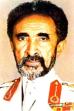
HAILE SELASSIE
In a triumphal ceremony in November 1930 the Ethiopian Ras Tafari Makonnen was crowned to be emperor of his country.
He put down his civilian name Ras Tafari (Ras=prince) and called himself His Imperial Majesty Haile Selassie I (strength of
the trinity).Haile Selassie is said to be the 225. descendant of the royal line of David. A heir of king Salomon and queen
Sheba
(Saba).
On October the 7th 1928 he was crowned to be king (Negus). On his way to the throne
he executed several enemies. Only after the mysterious death of the empress Zawditu he was crowned to be emperor also called
“king of kings” (Negusä nägäst). That was on November 2nd 1930. His complete title was:
His Imperial Majesty Haile Selassie, King of Kings, Lord of
the Lords, Conquering Lion of the tribe of Judah, Elect of God, Emperor of Ethiopia.
Jamaica
In Jamaica
the members of Garvey’s organisation were reading about this event and
were consulting their bible for a sign: Could it be the black king of whom Garvey was speaking? Revelation 5:2,5
"And
I saw a strong angel proclaiming with a loud voice, ‚Who is worthy to open the book, and to loose the seals thereof?
And one of the elders saith unto me, ‚Weep not: behold, the Lion of Judah, the Root of David, hath prevailed to open
the book, and to loose the seven spirits of God send forth into all the earth".
For
many black this was the day of fulfilment of Garvey’s prophecies. Haile Selassie was looked at as living god, who would
provide the return to Africa and the reuniting for all black. On Jamaica a religious community was built whose members called themselves according
to Haile Selassies civilian name “Rastafarians“.
Jah
Lloyd explained the meaning of this name like this:
"[...],
the word "Rastafari" is an ampharian word and therefore an original sound of creation. His interpretation is the following:
“Jah” means Jehovah, “Ras” means head, and “tafari” means “to be feared” Together
that means: “The head of the Almighty whom worthed to be feared”.
On the begin of the 30s the Jamaican newspaper „Daily Gleaner“ was
writing about a „Nyabingi-order“ in Ethiopia and in Congo which was said to be leaded by Selassie himself and
which swore a destroying war against the white race. The Jamaican Rastafarians
understood themselves also as Nyabingi-warriors in the army of god swore „death to all white and black oppressors (downpressors)”.
The belief doctrines were valid until about 1953. They are statements of black
that have been oppressed for a long time by Babylon and reached
a higher level of inspiration and therefore are chosen.
The Rastafari-religion received a lot of support of the ghettos because it helped
building up a new self-confidence for the black people, to develop pride and to emancipate themselves spiritually. Haile Selassi-pictures
were honoured like relics. They were at the same time passport and visa for the soon coming journey to Ethiopia.
Ethiopia
1936 – after the invasion of his country by the Italian racists lead by Mussolini
– Haile Selassie had to go to exile; first to Jerusalem, then to England. In May 1940 Winston Churchill saved him out of his
difficulties when Italy as an English
enemy officially joined into the second world war. He was smuggled to Carthum by the British and he started to organise an
army in the deserts of Sudan. On May the
5th 1941 he reached back on the throne in Addis Abbeba. His coronation and his
victory over the white attackers let his reputation in the black world increase extremely.
He carried out reforms in Ethiopia
and he wanted to change Ethiopia into
a modern country. 1955 he enacted a new constitution which assured his people a general voting right and equality in front
of the law with a little but important exception:
"Strength of his imperial blood as well as the ointments that HIM received, the person of the
emperor is holy. His dignity is untouchable and his power is undisputed."
Jamaica
1958 an other Rasta-leader invited about 300 brothers to a big "Nyabingi”.
21 days they spent by smoking ganja, drumming and dancing and making love. A militant fraction of the big brotherhood tried
to occupy the Victoria-park trying to conquer the city from there in the name of Selassie.
1959 an other Rasta-preacher sold again vessel tickets for the return to Africa for a date he announced: October the 5th 1959. Unfortunately
there was no vessel that day. He was arrested and left back his brothers, which sold all their goods, homeless in the ghettos
of Kingston.
The first man to realize the Africa mission was
Manley, the leader of the Jamaican Labour Party - then he knew it would end in a disaster. They said Haile Selassie was willing
to welcome only high-qualified immigrants, but these knew they would have a better life in Jamaica
than in Ethiopia. They said he wouldn’t
have welcomed the ganja–smoking, no-tax-paying Rastas.
Ethiopia
1960 there was a palace revolution in Ethiopia which was supported by Haile Selassies son, crown prince Asfa Wossen.
Just returned from an official visit to Brazil
the emperor let the revolution be fought down. Explained aim of the revolution was to build a new regime which should have
guaranteed a quicker social and economical development.
Jamaica
In April 1966 Norman Manley invited then -
as consolation - Haile Selassie to Jamaica.
More than a hundredtousand people were waiting at the airport. It was raining heavy. That moment when the door of the plane
opened and the emperor stepped outside the clouds opened and let the sun shine on him. The rastas burst with excitement over
this “heavenly sign” and couldn’t be held back. They pulled down the barrier and ran cheering on the runway.
During his visit in Jamaica Selassie didn’t mention anything about the Rastafari-culture
nor about his divines. But it was said between rastas that he gave the Rasta-elders
a secret document saying to liberate Jamaica first from the neo-colonialism
before they could immigrate to Africa: "liberation before emigration".
With that a
wound point of the rastas was removed, which was caused by the up to then not
fulfilled prophecy of the salvation of the black folk through the return to Africa. It was
put up to unknown date…
Ethiopia
After the palace revolution Selassie started to inform his folk about his political
aims over radio announcements, but many thought it was too late and he was doing
too less. A little group of intellectual elite of Ethiopia caused riots
in the 70s when the so called horn of Africa developed into a strategically important and
politically unsavest region in the world. The USA
sent military help to strengthen the Ethiopian army. The Sowjetunion armed their eternal enemy Somalia
and supported the revolutionary liberation fight in the region of Eritrea.
On August 27th 1975 Haile Selassie “died”.
"You nuh cyan bury Jah" the rastas said, "You can’t bury god“.
Therefore
even after Hailes Selassies so called death Ethiopia
is still the promised land and "Jah Rastafari" lives, then god will never die.
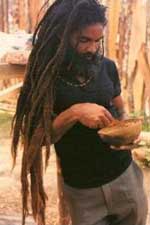
Rastafarian ways of thinking and livity
Rastafari is a lived religion and the fascination which its causing also to western
white left orientated people cannot only be explained by the exotic and the hypnotising music its more the attitudes of the
Rasta towards the „system“ and the consequent implementation of philosophic basic ideas into alternative life
forms.
On the question what Rasta-identity is Lloyd answered:
"...as I would say: Rastafari Identity is Rastafari, who feels it - knows it, who never know it
- a go feel it, seen"
Oneness
The whole way of life for rastas is orientated
by "oneness". Oneness is an expression of belonging together-feelings between Rastafarians but also an expression of universal
love, the feeling of god in everything and everybody. A lot of Rastas live together. Possess is unknown. In the ideal case
the land which is needed will just be taken.
According to Psalm 24:1: "The earth is
the Lords and all its fullness. The world and those who dwell therein.”
Suspicion, stealing, lying, greed, jealousy,
envy, hatred, betrayal are not right ways of living. In most aspects of life there is equality but not because there are laws
but by the awareness of the all the time presence of god. To put yourself over
another one would mean to despise god as god is in everybody.
Language
Oness can also be seen in the Rasta-dialect,
the so called „I n I“ Language: Instead of using “we” rastas use „I and I“ when they talk
about the community. Ras Historian interpretation is the following:
"“I“ in the normal English language is the first person,
you, he, she, it follow as second or third person. When I and I as Rasta look
at the numbers one comes first. Even 1 as number and I look similar. Therefore I and
I looked at each individual, who is a member of the Rastafarian community always as “I”. In a different way expressed;
everybody is always the first. Because it’s only the whole unity of all which builds the whole I and cause in this way
the perfect state."
According to Forsythe, sociologist und
Rastafarian, there is a difference between the "little I" and the "big I":
"The "little I" or me refers to the
lower self of the human beings; on his body, his identity that part of him which was born and will die. It's this "little
I“ who experiences desires, strives, misery and luck and who carries out actions and fears death. It’s the outside
dress of the "Big I", an instrument through which the "Big I" manifests on a material level”.
"The "Big I" is the eternal or true
self which was never born and will never die. Its gods divine spirit and holiness which is in everybody deep within."
The aim of Rasta members therefore is the
realization of the self and the blend of ”little I" und "Big I". That would be called then "I-nity" or Unity.
For Rastafarians the language is a holy
instrument and not only a simple way of communication. Language goes back to creation, written in the following statement
in the bible:
"On the begin there was the word and the word was with Jah
and Jah was the word”
(Joh.1,1)
In this the Rastafarian sees the proof
that words don’t have only sounds but also power. With the terms: „words, sounds and power“ the spirit,
the language and the heart correspond and get one which leads to the inspiration of thinking and feeling
"Through speaking Rasta renews the universe; striving for
sympathy, humility, love and harmony".
The best development for the language is
the "Reasoning", the discussion form of the Rastafarians. During the nightly smoking inspirations are told and will be discussed
detailed. This is a sacral act comparable to a prayer. The night is also a holy time because the day is ruled by Babylon.
The Reasoning is also of other meaning:
Rastafari is not only to be looked at as a movement without leader but its also living the protestant principle of preaching
to all believers.
Rasta-women
A Rasta-woman is called "sister" or "daughter".
It’s forbidden for women to wear trousers. In the fifth book of Moses 22,5 it’s written:
"A woman
shall not wear anything that pertains to a man, nor shall a man put on woman’s garment, for all who do so are an abomination
to the lord your god."
Homosexuality is strictly disapproved,
as its written in the bible:
The Epistle of Paul the Apostle to the Romans, 1. chapter:
"1,26 For this reason
God gave them up to vile passions. For even their women exchanged the natural use for what is against nature. 1,27 Likewise also the men, leaving the natural use of the woman, burned in their lust for one another. Men with
men committing what is shameful and receiving in themselves the penalty of their error which was due."
LEVITICUS, 18. chapter:
"18,22 You shall not lie by a man like by a woman.
It is an abomination."
and
same part, 20. chapter:
"20,13 If a man lies with a male as he lies with a woman, both of them have committed
an abomination. They shall surely be put to death. Their blood shall be upon them"
During the menstruation women are looked at as unclean and kept away from the community.
Also visible in the cursing patois expression “blood clot”.
Food habits
"In order for the head to think right the
body has to be healthy“ rastas say.
Rastafarians don’t drink any alcohol
and refuse „artificial“ food. Rastas don’t eat meat especially not bloody. Strict Rastas don’t even
eat fish, chicken nor eggs. They believe it will turn their stomach into a “cemetery”. “Agridishes" food
that grew in the earth and absolutely fresh natural food is „ital“. Ital is a mix of I and vital = life essential
and natural.
The food should be natural and fresh, without
salt or chemical substances to colour or to preserve. Tin food is anyway “buried food“.
The kitchen tools should be made out of
natural resources, too.
More about what can be eaten and what not you will find in Leviticus, chapter 11
and Deuteronomy 14,3 – 21a.
Rastafarians and the society
Rastas don’t do any salary work,
then "salary work is slavery". They prefer hand craft works, arts, poetry or music.
Within the
Rastafarian there are different groups: the Nyabinghi-order, the Twelve Tribes of Israel, the Ethiopian Orthodox Church,
Mystic Revelation of Rastafari, Bobo Ashanti and others, whose interpretation, about what Rastafari is, is different strict.
They are often persecuted by authorities
because of the use of ganja. The punishments are hard. For the Rastas the persecution is a massive oppression and harassment.
That they express also in their music.
Also with their appearance the Rastas are
sometimes not liked to be seen. They carry Dreadlocks and dress easy. This can cause fear for people who don’t know
anything about it. Often Rasta-children with dreadlocks are not even allowed to go to school.
Rastas don’t attend funerals because they dont’t believe in death.
“Death is like a chemical process: Nothing gets lost, it just changes its form.”
Dreadlocks
Dreadlocks are a symbol of devotion. They
are the antennas to god. They are a symbol of dignity and honour and a biblical symbol of the lion mane. Also here the Rastafarian
follow the recommendation of the bible:
Leviticus 21,5: "They shall not make
baldness upon their head [...]".
Also see numbers 6,5: “All the days of his vow of his separation no razor shall go on his head, until the days are fulfilled for which he
separated himself to the Lord, he shall be holy. Then he shall the locks of the hair of his head grow.”
And judges, 13,5: “()…and no razor shall come upon his head for the child shall be a Nazirite to
God from womb..()”
Dreadlocks are strength; see also the story
of Samson and Delilah in the bible.
The longer the locks of a Rastafarian are,
the longer he follows the Rasta-belief of the holy way of life according to the traditions. A Rasta without dreads is a "Baldhead"
– he cannot be taken serious.
Rastas, who had to go for an interview
by the police, got their locks cut there as an act of public discrimination and social control over the movement. Rastas are
very upset about this cruelty, because the dreadlocks are very important for the spirituality. They believe with the dreadlocks
they can think more clearly and recognize danger around them. They believe that they can receive inspiration of Jah with these
antennas. Most of the time when a Rasta is leaving his house he puts on his hat the so called „tam“. These hats
have mostly a red, golden and green colour.
"Red for the blood-shedding of the Suffarahs since the days of slavery! Gold, for the wealth, that has be stolen from the Suffarahs since Salomon’s
temple was built! Green, for the blessed land in Africa, which is expecting the black mans return to home."
Ganja
Ganja or Marihuana, also called "herb"
is Jerusalem’s bread, king’s bread, bread of the
lamb, herb of wisdom, herb Salomon’s.
Ganja, Cannabis sativa, is the holy herb
of the Rastafarians, of which has been spoken in several places in the bible:
"And the earth brought forth grass, the herb that yields
seeds according to its kind, and the tree that yields fruit, whose seed is in itself according to its kind. And God saw that
it was good.“ (1.Book Moses 1:12)
Ganja plays a major part in the religious
meditation because it leads to deep and clear inspiration about life. It builds up a connection to the soul.
"The ritual of passing the pipe (chalice) is part of Jahs
worshipping; it’s understood as a calling to the universal strength of the Almighty. The smoking of the herb symbolizes
unity, I-nity between those that gather before Jah. It unites those present with the fullness of the divine strength and builds
up a vibrating exchange of meditation between all who share the sacrament.”
(Itations of Jamaica acc. to Loth, 1991)
Sociologist und Rastafarian Dennis Forsythe:
"For the brothers ganja is the mystical body and the blood
of „Jesus“ – the burning sacrifice for god, made out of fire – which let the individual see and recognize
god or the „god-in-human beings“ , the „living-god”. They derive their moral right of usage of the
herbs of their personal experience with the plant and also of the book of Genesis, which allows the usage of all plants that
bring seeds."
Ganja is said to be food for the brain
and an „all-cure-medicine“. It helps by asthma, flue, sick stomach, fever, rheum, eye sickness, thrombosis and
many many more. None of the Rastas look at it as destructive.
Ganja can be smoked, be drunken as tea,
be used in food or be used external. It’s used also to make robes, cosmetic articles and even clothes. Its use produces
psycho-spiritual effects and gets a social-religious function. It’s said to cause visions and deepens all feelings,
to make creative and to bring peace to the soul.
In the 60s the export of ganja to the USA was multi-million-dollar-business every year.
It was well organised and in the hands of little farmers and rastas. Unfortunately the production, the usage and the selling
of ganja are forbidden. But its production is still an important branch of the agriculture.
Reggae-singer Ras Midas about ganja:
"I want to say something about the herb
and about what the herb got to do with our culture and our music. The right name for the herb is Cannabis. It’s the
only living herb in creation that men can drink as tea as well as smoke it. It brings you meditation about Jah. When I and
I make I and I music, then I and I use the herb, the herb leads me to the meditation of Jah. Then Jah will feed me with the
words, with the lyrics, the text and the melody, so that I am able to bring it out into reality. That’s why Babylon is fighting against the herb.
The herb and the music are according
to the concept of Rastafari the healing of the nations. Everywhere where the herb reaches, everywhere where Reggae is listened,
Rastafari will be. Because you have to communicate with the herb to know who Rastafari is. You have to communicate with the
herb to understand the music and its concept.”
Ganja is the strongest common experience
of Rastafari. The central ritual activity of the rastas is the "reasoning" over a glooming pipe. It’s passed from hand
to hand around the altar table as ritual symbol of earth, air, water and fire.
Ras Norma: "Babylon knows the wisdom you get from smoking ganja and they need to
keep you down from your meditation. They keep fighting against I herb you overstand? Because it's I herb, it's one special
herb to segregate and is herb, no man can make it, it comes from earth, it's a herb of truth and wisdom. I think if ganja
was legalized there would be positively less problems with cocaine and crack. When people would smoke herb, it would
be a meditation, humbleness put them to i-tate, you overstand? But when you drink rum, it's a different scene and you look
over, you going to see who is causing the problem. It's the crack, the heroin, cocaine, morphine, alcohol and cigarettes.
Herb put you upon humbleness, cause it's a healing herb. In Guyana
you can go to jail for three years just for one spliff. Lots of Rastas are prosecuted for herb. Not for killing or thieving
from no one, just for smoking the herb. But man need to be free from mental slavery. They kill brother Marley, Peter Tosh,
Marcus Garvey for speaking the truth, cause word Bob Marley was putting out fire upon Babylon.
If Bob Marley was on the face of the earth in this time, everyone would be Rasta, because he speaks the truth and he sign
it in his music and truth stands forever. But they can never stop I because if they put I in jail for three years, I when
I come out I still have to smoke I herb, because I herb is I divine meditation, I free to do what I need to do. Jah Rastafari,
Selassie I be praised."
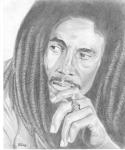
Music
Besides the smoking of the ganja the music
is the most important form of meditation. Rasta is the religion und Reggae their mass.
Originally the music of the Rastafarian
was made only by drums and vocal sounds. Its roots lays in “Burru”, a music form of Jamaica.
It’s been said that the music goes back to Nigerian and Ghanaian traditions. Burru was one of the only African music
styles that the slave masters allowed. The drums were played on the fields to increase the working speed. The rhythm of Burru
was first not accepted by the rastas but pushed through slowly.
In the late 50s Count Ossies Camp was the
centre of the musical development. A lot of musicians that were going to be important in the development of Ska and Reggae
met by Ossie to hold Jam sessions: Don Drummond, Rico Rodriguez, Roland Alphonso, Tommy McCook, Cedric Brooks and many more. Influence on the
Rasta-music had Jazz as well as Mento and rhythm and blues. In the 60s the musical river divided. On one hand side the influence
of the rastas on the Jamaican charts increased. On the other hand side an orthodox school
Nyabinghi-drumming was found in strict
separation to the commercial Babylonian world which emphasized the sacral character of the music. Nyabinghi contains African-rooted
elements as well as complex rhythms and offbeat-structures and a “heartbeat” bass.
"Nyabinghi means
war, but the weapon it uses is love, because only love can conquer evil. But if love can't conquer the evil in a person, then
the final judgment will be dreadful, which could be no other, than death to black and white downpressors".
(Ras Colwin in a
Reasoning (comp. ebd., S. 28))
„The
war about how I will manage the next day. “
Today Reggae and Rasta are mostly used
as synonym or at are at least mentioned in the same breath. But the members of the Nyabinghi-order is fighting against that.
"Reggae is some sort of a mix-up, mix-up business. Only Nyabinghi
music is divine and pure Rastafari music."
Winston in a reasoning
Their musical expression the members of
the Nyabinghi-order sees as the real Rasta-music: only Nyabinghi chantings are
serving the worshipping of Jah and are able through the strength of word, sounds and power – without the artificial
electrical energy of amplifiers – to chant down Babylon.
In opposition to the Nyabinghi-order there
are also Rastafari-orders that don’t think so strict. The order of "Twelve Tribes of Israel" for example uses Reggae
as means of transport for their religious contents. Reggae is their cultural form of expression.
Winston Rodney (Burning Spear) called
Nyabinghi in an interview his source of inspiration:
"The feelings of Nyabingi are coming through the music and
the music is coming through the feelings of the Nyabinghi. One Order."
And Freddie McGregor said in an interview:
"Whether the music and texts of a Bob Marley nor any other
Reggae-star (as long as they sing about Rastafari-contents) can be understood without Nyabinghi – the roots of their
expression and their vibration
But Nyabinghi is just one form of expression
of the Rasta-music. The Jamaican music scientist Pamela O´Gorman already wrote 1972:
"Through the whole history of Ska, rock steady and reggae
runs a thread of the voice of the Rastafarians. Sometimes stronger sometimes less. It brings new language into the texts,
a liturgical character in the melody and a Rasta-rhythm superimposes the pop-rhythm.”
While political parties like the social
democratic PNP had election slogans like "Power for the people" Reggae reflected the self-confidence and the experience of
the majority who had for the first time real representatives of their culture that could be chosen free and express the true
“Power for the people”. That’s the main cultural revolution behind the “phenomenon” of Reggae.
When the young Jamaicans of today speak of classical music then they don’t mean Bach or Beethoven, they are talking
of Bob Marley, Burning Spear and Mutabaruka.
The music stays so far an autonomous medium
of communication as long as the performers are not striving for international fame. Because if questions of the perfect sales
business are of more significance than the contents Reggae will also get a victim of Babylonian control and turns into a commercial
“style and fashion” music.
The members of the Nyabinghi-Order reject
the reggae with the argument of corruption. Saying that Reggae is no Rasta-music because its performers sell gods word against
money and nobody can serve two masters – Jah Rastafari and the Dollar.
For many rastas getting involved into
the reggae-business is at the end the most sincere „organisation“ of surviving in Babylon. To chant down the strived system and
at the same time getting paid for it corresponds – according to Larry in a reasoning – completely with the intentions
of some rastas.
Different than the rasta-philsophy Reggae
developed in the urban ghetto districts. The music was at first an instrument of the young oppressed urban sufferers. Only
with the increasing influence of Rastafari into the medium Reggae – midst of the 70s -
it received a global orientation that made Trenchtown and Soweto to a synonym for the same wrong.
On the begin Reggae was the expression form of black Jamaican to find a way to cultural identity and self-confidence.
Bob Marley
Bob Marley was born on February 6th 1945.
His young mother was Cedella Marley. His white father, Captain Norval Sinclair Marley disappeared one day after the wedding
with Cedella. Bob Marley partly grew up in the hills of St. Ann, where he lived with his mother
by his grandfather who was a famous Myalman, and partly he grew up in the yards of Kingston.
Delighted by the American R&B music
that he heard in Kingston, he started to write songs himself.
He was dreaming of getting a star, now that this was a realistic dream thanks to the radio and the record industry. Before
only Cricket, football and crime were a possibility to achieve wealth and fame – and the last of them most likely seemed
to lead to success
Bob Marley remembered that when he was
a child he was scared of the Rastas. Ghetto children looked at them as blackheart-men. But to you use the Rasta language was
extremely stylish.
Actually it was Rita Marley who introduced
Bob to the philosophy of Rastafari. She saw Haile Selassie when he visited Jamaica
and was very impressed by him. Bob Marley met Mortimo Planno, a Rasta, who was a member of the Divine Theocratic Temple of Rastafari in Kingston.
He taught him about the way of thinking and the lifestyle of the Rastas and together with him Bob joined a groundation-party
which has been held since Selassies visit on April 21st. And it was Planno who told him: „A song is a sign.”
When Bob Marley was a boy he had a dream,
a mystical experience, in which Haile Selassie, how he interpreted now, gave him a ring. This ring he really received later
from Haile Selassies son Asfa Wossen. A black stone with the image of the lion of Judah. It’s the ring Bob Marley wears on some pictures.
On the begin of the 70s the Wailers were
more than a hit factory. They were responsible for the first signs of a fundamental change in the attitude of the Jamaicans
towards their music. For them the Rasta-Reggae interpreted the morally badness of the racial oppression on the whole planet,
explained it and forced it into borders. They wanted to let the entire world know that Reggae was the start of the apocalypse.
Bob Marley joined the Twelve Tribes of Israel as can be seen on the back of his record cover „Rastaman vibration”.
"He spread the idea of Rastafari and the revolutionary strength
of the Reggae in the world. Everywhere in the third world Bob Marley was seen as a modern “Myalman” who had
the will and the power to cast away the bad.”
wrote Timothy White in his Bob Marley biography.
Zion
Zion is the place,
where all gather who haven’t accepted the wrong teachings of Babylon.
It’s the point of intersection where Judaism and Christianity meet. Zion
is god s kingdom on earth.
Babylon
"Babylon. The corrupt
establishment of the western society. The west and the western civilisation, built on capitalism, presumed having the rule
over human beings. The word is also used for „police“ because they protect the malicious system. Sometimes its
also used in the context of the former colonial power, the centre of darkness and ruin.”
(from Itation of Jamaica)
In the prophecy of the old testament Babylon means the historian Babel. "Babylon Dread", the dreadful Babylon according to Revelation 17,5 or the “Roman
system” is the terrible world in which Rastafarians have to live, the exile from where they want to turn back home to
the promised land. The chosen will live on Mount Zion.
Rastas will not take any weapons in their hands and also don’t have to nasty up their hands with Babylons blood.
Babylon will destroy it-self. Jah T. used the argument in a reasoning, that countries like USA
in greed for profit - "They worship the dollar as their God" – sell weapons to their enemies what will have to lead to the fulfilment of the biblical
prophecy "The wicked shall fall through their own sword".
Bongo Hu-I said that first everybody has to recognize what Babylon
is: A ruling system that builds up on a cooperation of religion, politics and trade. Who decides for Rastas way of life has
to fight down Babylon in himself first through a single-minded
retreat of religion, politics and trade. Everybody is now free of corruption and is able to reach further levels of Rasta
livity through righteous living and deepen meditation.
The song "Rivers of Babylon", known to many as a „happy reggae sound", has been taken, almost word-for-word,
out of Psalm 137 in the bible. It is a key song of the Rastafarian movement in Jamaica.
By the rivers of Babylon,
there we sat down, yea, we wept
when we remembered Zion.
We hung our harps
upon the willows in the midst of it.
For there those who carried us away captive
asked us a song
and those who plundered us requested mirth,
saying “sing us one of the songs of Zion!”
How shall we sing the Lords song
in a foreign land?
A ballad of the 70s which predicted the close fall of the religious realm at the mouth of the rivers Aniene und Tiber.
Armageddon
The Armageddon
is the final fight between good and evil and can be looked at like the Christian judgement day.
Irie
Irie is
an expression of positive vibes. The roots of the word lay in the Hebrew biblical word „arjeh” (lion) and “ariel”
(god’s lion). Lions accompany His Imperial Majesty and decorate the rooms of the Rastafarians. The lion is also a symbol for Africa.
The Lion of Judah
"The lion of Judah
shall break every chain and bring us victory again and again".
This central idea – used by the first Rastas like Howell as a battle cry against the colonial invasion of Ethiopia through Mussolini – made the majority
of the Jamaicans for the first conscious of what dimension theology could take in the liberation. "Every chain" means every form of colonial, political, sociological, economical, cultural and religious
subjugation. Rastafari confronts the social reality and their multiple oppressions, "Babylon System“, with the philosophy
and culture of liberation. Out of the Rasta-religion developed a lifestyle, a way of thinking, a language and a music which
can be seen as a self standing culture within the Jamaican culture.
Africa
Africa is the mother continent of all human beings. From there the first
people left to Europe and to Arabia, after to Asia and Australian and then over the Bering street, which was passable at that
time, to North America, Caribbean down to South America. Therefore we all have the same roots
and the same blood and that’s why we are all one!
Book recommendation
Babylon has to fall, by Girma Gebre-Selassie.
BLESSINGS
AND GUIDANCE TO ALL MY RASTA SISTREN AND BREDDREN, SHALL JAH ALWAYS BE THE LIGHT IN YOUR DARKNESS!
|